
Revision Joint Replacement
Revision joint replacement is a specialized surgical procedure performed when a previous joint replacement no longer functions properly. It may be required due to implant loosening, wear and tear, infection, instability, or repeated dislocation.
- Failed Joint Replacement
- Implant Loosening
- Joint Infection
- Joint Instability
- Recurrent Dislocation
- Implant Wear and Tear
- Periprosthetic Fracture
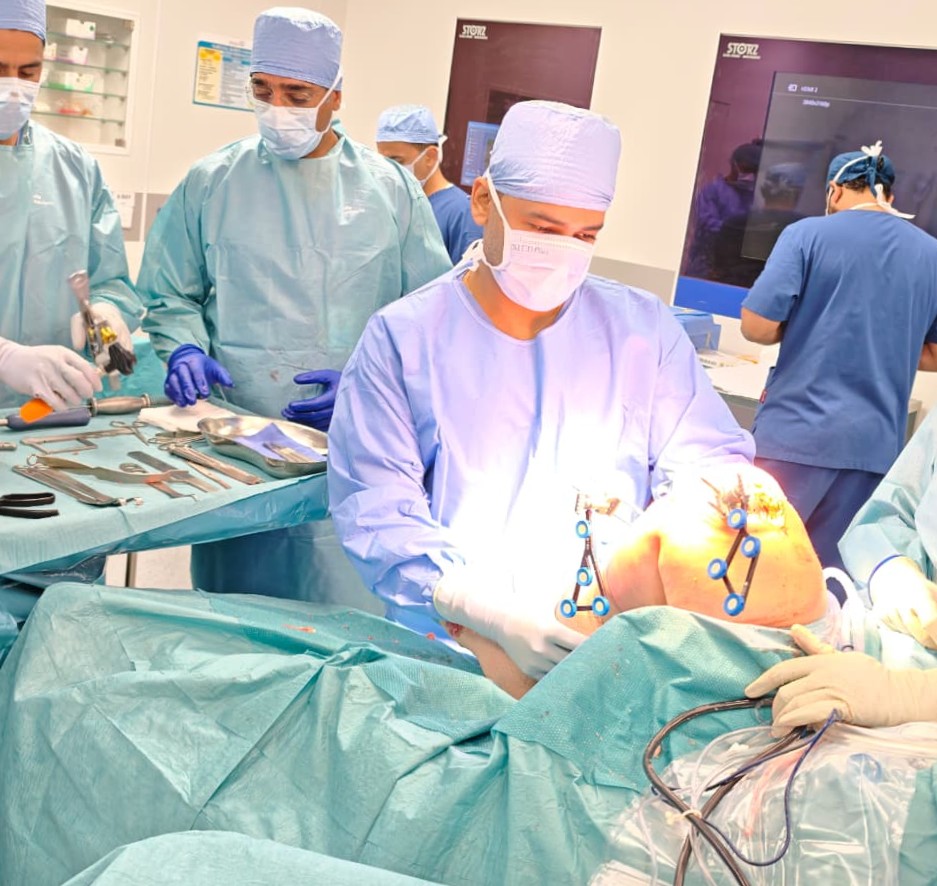
1. Failed Joint Replacement:
Revision surgery may be recommended when an existing artificial joint becomes damaged, loose, painful, unstable, or fails to function properly. A detailed evaluation helps identify the underlying problem and determine the most appropriate treatment approach.
2. Treatment of Implant Loosening
Over time, an artificial joint implant may become loose from the surrounding bone due to wear, bone changes, or other factors. This can cause persistent pain, instability, and difficulty with walking or daily activities.
3. Management of Infection
Infection around an artificial joint is a serious complication that may require specialized treatment and, in selected cases, revision surgery. The treatment plan depends on the severity of infection, implant condition, and surrounding bone and soft tissues.
4.Replacement of Worn Components:
Artificial joint components can gradually experience wear over time, potentially affecting joint stability and function. During revision surgery, damaged or worn components may be replaced with suitable implants based on the patient’s individual joint condition.
5. Correction of Instability:
.Revision surgery can help address repeated dislocation, instability, or abnormal movement of a replaced joint. Careful assessment of implant positioning, soft-tissue balance, bone condition, and joint stability helps guide the revision procedure.
6. Specialized Surgical Care
Complex Primary Joint Replacement may be required when significant deformity, advanced arthritis, bone loss, previous trauma, or other anatomical challenges make standard joint replacement more demanding. Treatment involves detailed assessment and personalized surgical planning. Depending on the joint and condition, advanced techniques may support accurate implant positioning and comprehensive orthopaedic care.