
Robotic Joint Replacement
Robotic Joint Replacement combines advanced technology with personalized surgical planning to assist in accurate implant positioning and alignment. It may be used for selected knee and hip replacement procedures. Dr. Sparsh Naik provides comprehensive joint replacement care, including robotic knee and hip replacement, total knee replacement, and total hip replacement based on individual patient needs.
- Robotic Knee Replacement
- Robotic Hip Replacement
- Total Knee Replacement
- Total Hip Replacement
- Partial Knee Replacement
- Revision Knee Replacement
- Revision Hip Replacement
- Complex Primary Joint Replacement
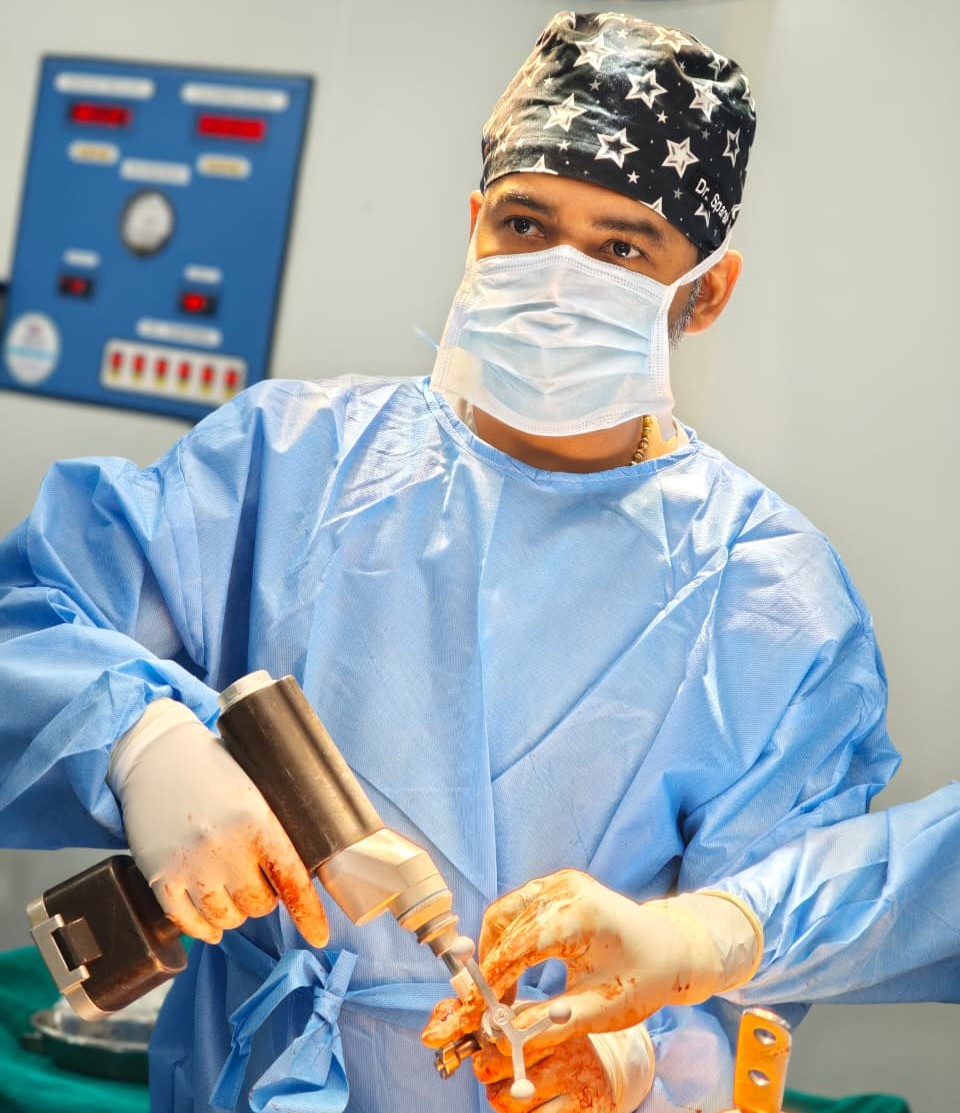
1. Robotic Knee Replacement
Robotic Knee Replacement uses computer-assisted technology to help with personalized surgical planning, bone preparation, and implant positioning. Robot Assisted Knee Replacement may provide greater precision during selected procedures. Advanced options such as CORI Robotic Knee Replacement can support individualized planning while preserving appropriate bone and soft-tissue structures. Treatment depends on the patient’s arthritis, alignment, and overall joint condition.
2. Robotic Hip Replacement
Robotic Hip Replacement uses advanced computer-assisted technology to support personalized surgical planning and implant positioning. Robot Assisted Hip Replacement may be considered for selected patients requiring total hip replacement. The approach can assist the surgeon in planning component placement according to individual anatomy. Dr. Sparsh Naik provides robotic hip replacement care based on the patient’s condition and surgical requirements.
3. Total Knee Replacement
Total Knee Replacement may be recommended for patients with advanced knee arthritis, significant cartilage damage, persistent pain, or functional limitations when appropriate non-surgical treatment is no longer sufficient. Robotic Total Knee Replacement can support personalized surgical planning and precision during selected procedures. The treatment approach is determined after clinical assessment, imaging, and evaluation of knee alignment and joint damage.
4. Total Hip Replacement
Total Hip Replacement is a surgical procedure used to replace damaged portions of the hip joint when arthritis, AVN Hip, or other conditions cause significant pain and functional limitations. Robotic THR and Robot Assisted Hip Replacement may be considered for appropriately selected patients. Personalized surgical planning helps address individual anatomy and supports accurate positioning of the hip replacement components.
5. Partial Knee Replacement
Partial Knee Replacement, also called unicompartmental knee replacement or UKR, may be considered when arthritis is limited primarily to one compartment of the knee. It preserves healthy bone and other functioning parts of the joint. Robotic Partial Knee Replacement can support personalized implant positioning and precision during appropriately selected procedures.
6.Revision Knee Replacement
Revision Knee Replacement is performed when a previous knee replacement develops problems such as implant loosening, infection, instability, wear, or persistent pain. A thorough clinical and imaging assessment helps identify the underlying cause. Revision arthroplasty may involve removal or replacement of implants and complex reconstruction depending on bone and soft-tissue conditions.
7. Revision Hip Replacement
Revision Hip Replacement is required when a previous hip replacement fails because of implant loosening, infection, instability, wear, fracture, or other complications. The procedure is more complex than primary surgery and requires detailed evaluation of bone quality and implant status. Personalized surgical planning helps determine the appropriate revision strategy.
8. Complex Primary Joint Replacement
Complex Primary Joint Replacement may be required when significant deformity, advanced arthritis, bone loss, previous trauma, or other anatomical challenges make standard joint replacement more demanding. Treatment involves detailed assessment and personalized surgical planning. Depending on the joint and condition, advanced techniques may support accurate implant positioning and comprehensive orthopaedic care.